Recently, I came across a story about a violent fight on a school bus. A young man assaulted a young woman so severely that he knocked out her teeth. Like many others, I was horrified. The brutality alone was enough to shake me. But what unsettled me even more was what surrounded the violence.
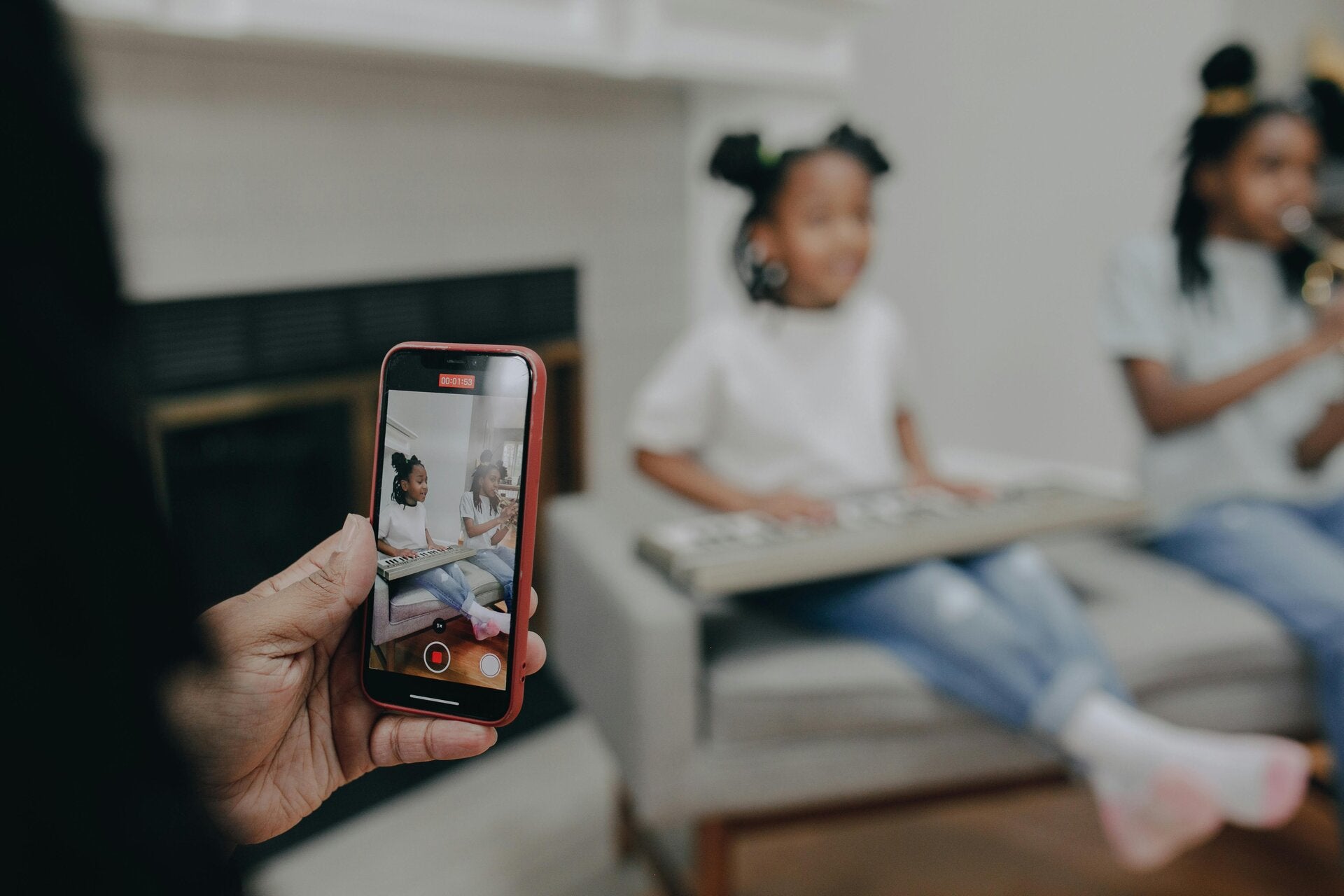
Students stood nearby—recording.
They screamed for someone to pull him off of her. They shouted. They reacted. But they did not intervene. They documented.
It forced me to ask an uncomfortable question: At what point did capturing the moment become more important than changing it? Was the ability to post, share, and accumulate views more valuable than the safety of a real, breathing human being in distress?
If we are honest, the answer appears to be yes.
And that realization led me to a larger question: Why are we so tethered?
Just the night before, I walked into a meeting with at least ten adults in the room. Nearly every face was angled downward, lit by the glow of a screen. I commented—lightly—about how everyone seemed immersed in their phones. One person sarcastically picked up his device in defiance. Another insisted she was researching something important. Someone else told me to leave her alone.
I left that room wondering: When did presence become optional? When did shared physical space stop meaning shared attention? Is this truly what we have accepted as normal in 2026?
These observations are not isolated. They mirror what we see everywhere. Adults conducting full-volume speakerphone conversations in grocery store aisles. Employees texting while customers wait. Colleagues insisting you must be reachable at all times because “something might happen.” I have been told more than once that I should always have my phone on me. My response remains simple: If it is truly urgent, the intercom still works.
I am a proud Gen Xer. I have lived through rotary phones, pagers, dial-up internet, microfiche machines, card catalogs, and the Dewey Decimal System. I have navigated online databases, scholarly journals, and now artificial intelligence. I can use a book, the internet, and AI in the same research process without confusion. I understand that Wikipedia can be a starting point while recognizing its limitations. I understand technological evolution.
But adaptation is not the same as dependence.
Yes, information has always been editable. That is not new. What is new is the constant tether—the expectation of immediate response, the anxiety of disconnection, the reflex to record rather than respond.
And when adults live this way, why are we surprised that students do the same?
And this is where the conversation moves from buses and meeting rooms into our classrooms.
If adults struggle to detach, why are we surprised when students experience visible distress the moment a phone policy is enforced? If we normalize divided attention, why are we alarmed when sustained focus feels impossible for them?
What we are witnessing in schools is not simply defiance. It is habituation.
Many students have grown up in a world where silence is immediately filled, boredom is instantly solved, and discomfort is numbed by a scroll. The brain adapts to that rhythm. Constant notifications, short-form video, and algorithm-driven content train the mind to expect rapid stimulation and immediate reward. Classroom learning, however, asks for something very different. It asks for patience. It asks for cognitive endurance. It asks students to sit with complexity long enough to understand it.
That is not a moral failing. It is a neurological shift.
When a student reacts with anger because a phone is confiscated, we often interpret it as entitlement. But what if part of that reaction is withdrawal? What if we are interrupting a constant dopamine loop without ever teaching them how to function without it?
This is not an argument against boundaries. Boundaries are essential. Schools must have clear policies. But boundaries without intentional redesign of engagement will always feel punitive.
If we want students to untether, we must give them something worth tethering to.
That requires us to reimagine instruction—not abandon rigor, but deepen it.
The Tethered Society: Are We Still Present in Our Own Lives?
There was a time when “being there” meant something physical.
You sat at the table.
You looked someone in the eye.
You listened.
You laughed.
You disagreed.
You were present.
Today, we are tethered.
We are tethered to notifications, to scroll cycles, to curated realities that live in our palms. We gather in rooms, yet drift into screens. We sit across from breathing, living, complex human beings—and choose pixels.
And the cost is greater than we want to admit.
The Illusion of Connection
Technology has given us unprecedented access to information, opportunity, and community. There is no denying that. But there is a difference between access and intimacy. There is a difference between communication and communion.
Research from institutions like the Pew Research Center and studies summarized by the American Psychological Association have repeatedly noted correlations between increased screen time and reduced attention span, heightened anxiety, and emotional dysregulation among adolescents.
While correlation does not always mean causation, patterns matter.
Teachers see it daily.
Students struggle to sustain focus for more than a few minutes without checking a device. Conversations are shorter. Silence is uncomfortable. Reflection feels foreign. And when a school institutes a phone policy—especially bans or confiscations—the reaction can be disproportionate. Anger. Defiance. Withdrawal. Even rage.
Why?
Because when we are tethered long enough, detachment feels like deprivation.
The Classroom as a Withdrawal Space
If we are honest, school is becoming one of the only structured spaces where students are asked to disconnect. And for some, that disconnection feels like loss.
Phones are not just devices; they are social lifelines, entertainment systems, identity mirrors, and coping mechanisms. Removing them without addressing the emotional reliance can trigger real distress.
But here is the deeper question:
Have we, as adults, modeled detachment?
Or are we tethered too?
Students notice when we check email mid-discussion. They notice when meetings are interrupted by buzzing pockets. They notice when we preach presence but practice distraction.
If we want a less tethered generation, we must become less tethered educators.
Are Screens Reshaping Cognition?
Emerging neuroscience research suggests that constant digital stimulation can impact executive functioning skills—attention control, impulse regulation, working memory. Fast-paced scrolling trains the brain for novelty, not depth. For reaction, not reflection.
Schools, however, require depth.
Reading primary documents. Writing extended responses. Engaging in civil discourse. Thinking across time and place. Synthesizing ideas.
These are slow skills.
And slow skills require practice.
When students react strongly to phone confiscation, it may not simply be “defiance.” It may be the nervous system reacting to the sudden removal of a dopamine loop. Understanding this helps us respond with strategy rather than shame.
The Solution Is Not Just Bans—It’s Better Engagement
Let us be clear: boundaries matter. Clear phone policies are necessary. But policy without pedagogy will always feel punitive.
The question is: how do we design classrooms that are compelling enough to compete with a screen?
This is where we must leverage tools wisely—including AI.
Artificial intelligence is not the enemy of literacy. When used intentionally, it can remix and amplify the practices we already value:
-
Generate differentiated reading questions for complex texts.
-
Create primary-source simulations.
-
Draft debate prompts that connect historical themes to modern dilemmas.
-
Provide immediate formative feedback.
-
Offer multiple representations of the same content (visual, auditory, analytical).
AI can help us create dynamic, inquiry-based lessons faster—freeing us to focus on human interaction.
Imagine:
Students reading aloud together.
Small groups debating.
Live annotation of historical speeches.
Role-play simulations.
Socratic seminars that lead to real research questions.
Technology can assist in planning, but presence must drive the room.
Modeling the Untethered Life
If we want students to put their phones down, we must show them what they gain in exchange.
We can:
-
Read during sustained silent reading alongside them.
-
Share what we are currently reading.
-
Engage in discussions without devices on the desk.
-
Build research projects that begin with curiosity, not Google.
-
Allow productive struggle before instant answers.
-
Normalize boredom as the birthplace of creativity.
Studies on literacy engagement consistently show that students are more likely to read when adults model reading behaviors. Modeling is not performative—it is participatory.
When students see adults choosing books over screens, conversation over scrolling, and thoughtfulness over immediacy, they receive a different script for adulthood.
Literacy as Liberation
This is where the work becomes cultural.
The Black Intellirati initiative is rooted in a powerful belief: literacy is not optional—it is liberation. Historically, access to reading and writing was restricted precisely because literacy creates agency. It creates economic mobility. It creates political voice. It creates imagination.
In communities where reading has been weaponized against us, reclaiming it becomes an act of resistance.
When students are perpetually tethered to entertainment algorithms, they are not being liberated. They are being managed.
Deep reading strengthens comprehension, empathy, and critical analysis. It slows the mind in a way that strengthens it.
A culture that scrolls endlessly but reads rarely is a culture at risk of intellectual malnourishment.
The Black Intellirati vision insists that we cultivate readers—joyful, powerful, culturally grounded readers. And that requires us to create spaces where phones are not the dominant text.
Reimagining School as a Human Space
What if we framed school not as a place where phones are banned—but as a place where humanity is prioritized?
A place where:
-
Conversations matter.
-
Eye contact is normal.
-
Disagreement is thoughtful.
-
Reading is communal.
-
Curiosity is cultivated.
Phones are tools. They are not identities. They are not companions. They are not substitutes for living rooms, classrooms, or lunch tables filled with actual people.
We are living in a tethered society.
But we do not have to remain bound.
As educators, leaders, and cultural stewards, we can:
-
Establish clear boundaries around devices.
-
Teach digital literacy alongside traditional literacy.
-
Design engaging, inquiry-driven lessons.
-
Use AI to enhance planning—not replace presence.
-
Model what it looks like to be fully alive in the room.
The goal is not to reject technology.
It is to master it—so that it does not master us.
And perhaps the most radical act we can model for students is this:
Put the phone down.
Look up.
Read deeply.
Speak thoughtfully.
Live presently.
That is the beginning of an untethered generation.
Add comment
Comments